
AMDIn development

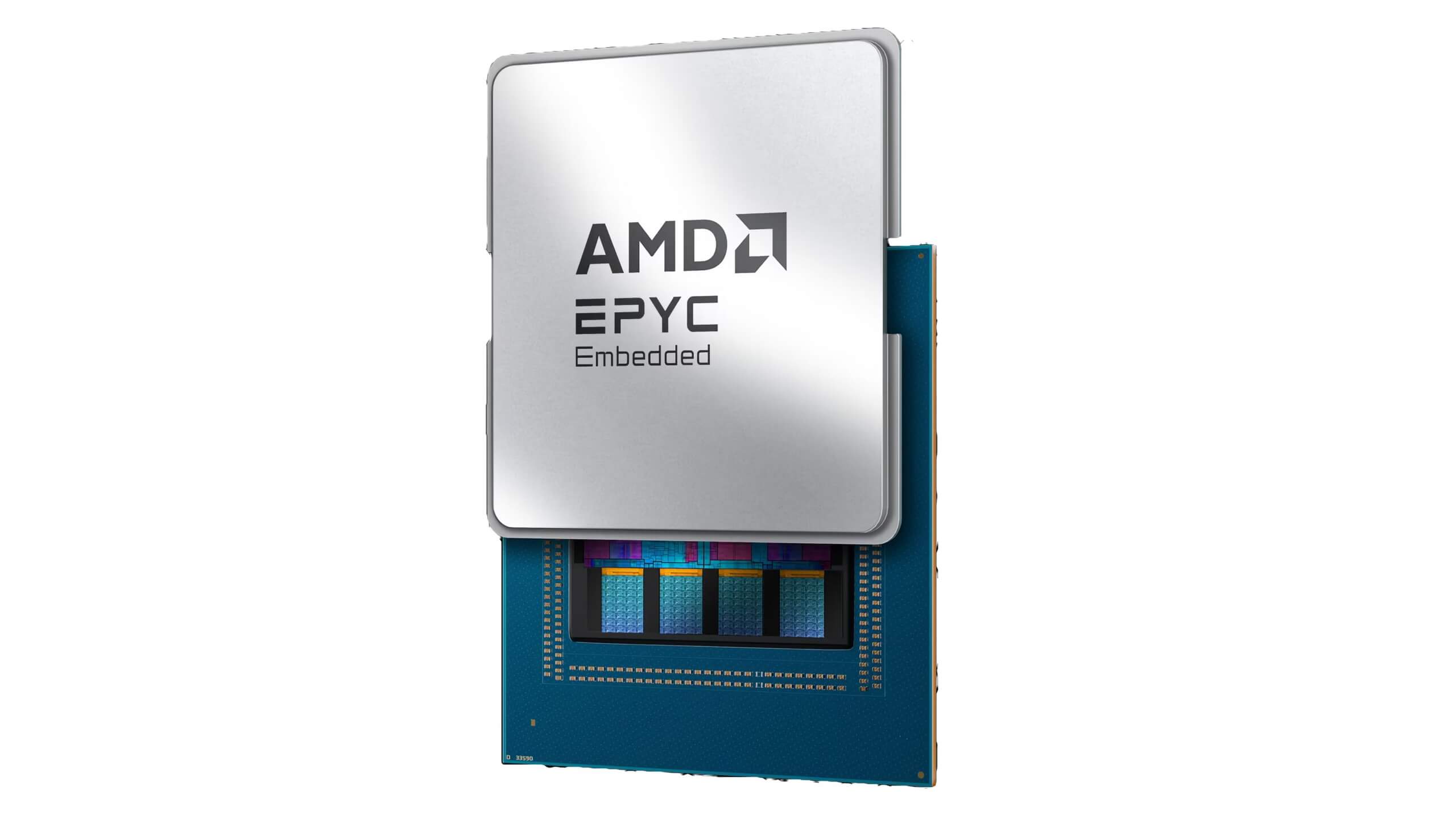
AMD unveils 2nm Epyc 9006 processors with up to 256 cores and prices of up to $15 000
Source: Autobound Signal API · 128 signals tracked for AMD · updated

Get AMD's live signals in Claude or ChatGPT, or by API

AskWhat changed at AMD this week? Use Autobound signals for amd.com.

What happened

AMD has developed its SP8 platform for server solutions, scheduled to arrive in the first half of next year.

Source

Article excerpt

Highlighted: the sentence this signal was extracted from

AMD has announced its sixth-generation EPYC 9006 lineup, based on the Zen 6 architecture. The processors are made using TSMC's 2nm process. The EPYC 9006 lineup combines two types of processor cores: Zen 6 cores focused on single-core performance and more compact Zen 6c cores, which make it possible to fit more cores into a processor. This approach lets AMD offer solutions for a range of workloads - from applications sensitive to the speed of individual operations to large-scale parallel computing and AI agent workloads. The most powerful model is the EPYC 9996. It has 256 cores and 512 threads, a base clock speed of 2.55 GHz, and a boost clock speed of up to 4.1 GHz. Its L3 cache reaches 1,024 MB, while its default power consumption is 600 W. The lineup also includes models with 192, 168, 128, 96, and 64 cores. Some variants are designed for high clock speeds and can boost to 5.3 GHz. The SP7 system-on-chip supports 16 channels of DDR5 memory and PCIe 6.0, providing 96 lanes. This makes it possible to build server systems with high memory bandwidth and multiple accelerators and storage devices. AMD has also developed the SP8 platform, which features a different set of interfaces and memory specifications. Designed for more balanced server solutions, it is intended to expand the lineup by 2027. AMD said the first EPYC 9006 processors will become available on the SP7 platform...

Keep reading with a free account

The rest of this article, and every signal for AMD, is in your free account.

Extracted by Autobound

From the Signal API record
Event
In development

What this signalsWork in development often leads to new buying for tools, data and services.

Product
SP8

The full record

From the Signal API record

Topics and mentions

Product tags

  • general technology

Extraction

Confidence
85%
Detected
Nov 11, 2026
signal_type
news
signal_subtype
is_developing

Use this data

Get every in development signal for AMD and the companies you sell to, in the tools you already use.

  1. Ask Claude about it

    Connect Autobound to Claude, Claude Code or Cursor with MCP. Then ask: “What changed at AMD this week?”

  2. Send it to your own tools

    The Signal API returns in development signals for any list of companies as JSON, for your CRM, warehouse or app.

  3. Try it free

    Sign up and spend your free credits on the companies you sell to.

    Start Free1,000 free credits

The API returns more than this page shows

This page shows a preview. The full news record in the Signal API and MCP can also have these 8 fields. Some fields are empty for some signals.

Company

  • linkedin_urlValue in the API
  • industriesValue in the API
  • employee_count_lowValue in the API
  • employee_count_highValue in the API
  • revenueValue in the API
  • descriptionValue in the API

Signal

  • signal_nameValue in the API
  • associationValue in the API
Show the full JSONThe record on this page and the API request

GET /v1/signals/4d8e20b5-87ca-1a50-bce6-e30a8be5b591 returns this record as JSON. POST /v1/companies/enrich returns every signal for amd.com.

{
  "signal_id": "4d8e20b5-87ca-1a50-bce6-e30a8be5b591",
  "signal_type": "news",
  "signal_subtype": "is_developing",
  "detected_at": "2026-11-11T13:35:32+00:00",
  "company": {
    "name": "AMD",
    "domain": "amd.com"
  },
  "data": {
    "url": "https://mobidevices.com/en/amd-epyc-9006",
    "title": "AMD unveils 2nm Epyc 9006 processors with up to 256 cores and prices of up to $15 000 - mobidevices.com",
    "excerpt": "AMD has announced its sixth-generation EPYC 9006 lineup, based on the Zen 6 architecture. The processors are made using TSMC’s 2nm process. The EPYC 9006 lineup combines two types of processor cores: Zen 6 cores focused on single-core performance and more compact Zen 6c cores, which make it possible to fit more cores into a processor. This approach lets AMD offer solutions for a range of workloads - from applications sensitive to the speed of individual operations to large-scale parallel computing and AI agent workloads. The most powerful model is the EPYC 9996. It has 256 cores and 512 threads, a base clock speed of 2.55 GHz, and a boost clock speed of up to 4.1 GHz. Its L3 cache reaches 1,024 MB, while its default power consumption is 600 W. The lineup also includes models with 192, 168, 128, 96, and 64 cores. Some variants are designed for high clock speeds and can boost to 5.3 GHz. The SP7 system-on-chip supports 16 channels of DDR5 memory and PCIe 6.0, providing 96 lanes. This makes it possible to build server systems with high memory bandwidth and multiple accelerators and storage devices. AMD has also developed the SP8 platform, which features a different set of interfaces and memory specifications. Designed for more balanced server solutions, it is intended to expand the lineup by 2027. AMD said the first EPYC 9006 processors will become available on the SP7 platform...",
    "product": "SP8",
    "summary": "AMD has developed its SP8 platform for server solutions, scheduled to arrive in the first half of next year.",
    "planning": true,
    "image_url": "https://mobidevices.com/images/2026/11/amd-epyc-9006_1.jpg",
    "confidence": 0.85,
    "product_data": {
      "name": "SP8",
      "full_text": "SP8 platform",
      "fuzzy_match": false
    },
    "product_tags": [
      "general_technology"
    ],
    "published_at": "2026-11-11T13:35:32Z",
    "article_sentence": "AMD has also developed the SP8 platform, which features a different set of interfaces and memory specifications."
  }
}

Long text fields are shortened on this page.

Looking up one signal by its id is free. Enrich costs 2 credits per signal returned; a call with no results is free.