
Neuralink Participants Steer Wheelchairs With Pure Thought
Article excerpt
Highlighted: the sentence this signal was extracted from
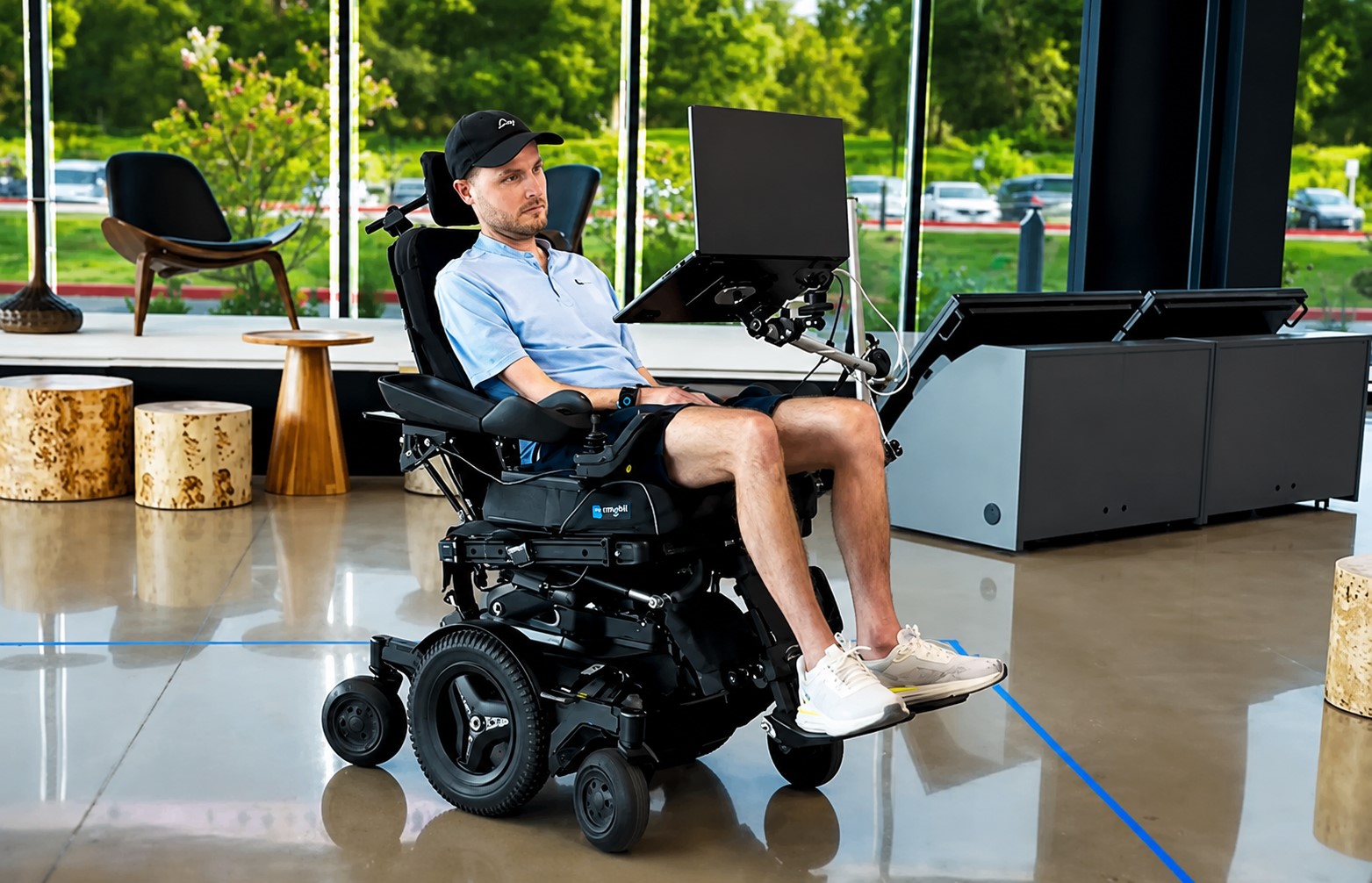
A quadriplegic person rolls through a room - no joystick, no breath tube, no head tilt. Just thinking about moving. That's what Neuralink's clinical trial participants are doing with the company's N1 brain implant , a wireless chip implanted in the motor cortex that translates neural intent into wheelchair commands. The underlying mechanics are surprisingly literal: think about moving your hand right, and the chair turns right. It sounds like something lifted from a superhero origin story, but 21 enrolled participants are doing it in real trials right now. The N1 implant converts neural firing patterns into driving commands through a chain of hardware and machine learning that takes milliseconds - not magic. 1,024 electrodes on 64 flexible threads - each thinner than a human hair - sit inside the motor cortex, placed by Neuralink's R1 surgical robot. A machine learning model reads the neural spikes and maps them to a 2D cursor moving along X and Y axes. That cursor becomes a virtual joystick. Custom electronics then translate joystick signals into commands any standard powered wheelchair already understands, according to TechEBlog's coverage of the demo. "The first patient could operate a cursor simply by thinking within minutes. It's incredibly swift. The signals are interpreted, and artificial intelligence decodes them," a Canadian neurosurgeon involved in Neuralink's...
Keep reading with a free account
The rest of this article, and every signal for Neuralink, is in your free account.