
ChatGPT for Clinicians vs OpenEvidence (2026): OpenAI's new free tool vs the platform doctors already use.
Article excerpt
Highlighted: the sentence this signal was extracted from
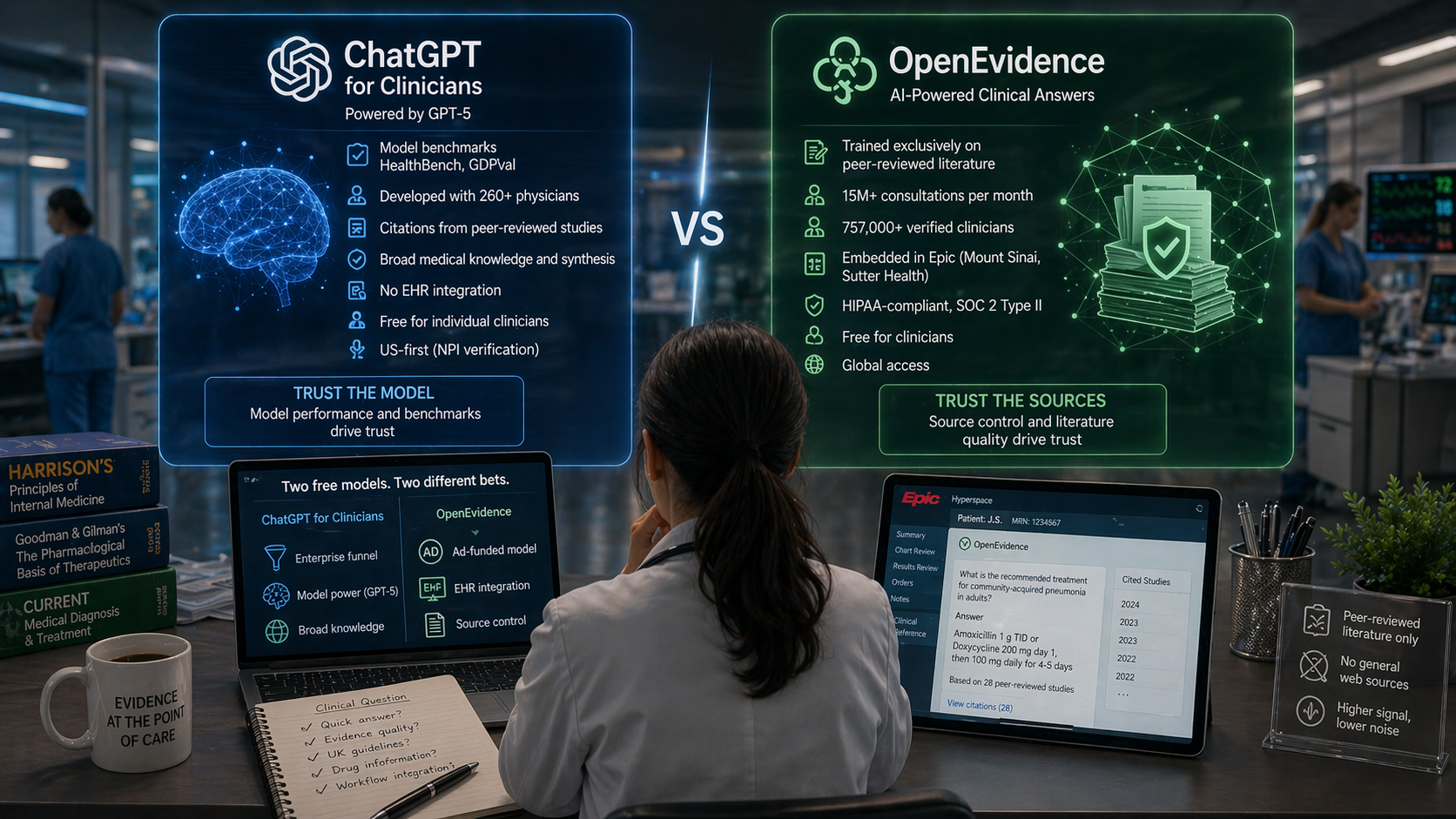
ChatGPT for Clinicians vs OpenEvidence (2026): OpenAI's new free tool vs the platform doctors already use. Two free clinician-facing AI tools now compete for daily use by working doctors. ChatGPT for Clinicians, launched by OpenAI on 22 April 2026, enters a market where OpenEvidence already processes approximately 15 million clinical consultations per month from over 757,000 verified clinicians. Both are free. Both target individual physicians. The approaches to trust, evidence grounding, and revenue differ fundamentally. Business model. ChatGPT for Clinicians is free as part of OpenAI's three-tier healthcare stack (consumer | individual clinician | enterprise). The revenue model for this specific product is unclear - most likely a funnel to ChatGPT for Healthcare, the enterprise product deployed at AdventHealth, HCA, Cedars-Sinai, and five other major US institutions at custom enterprise pricing. OpenAI does not need this product to generate revenue directly; it needs it to build clinician familiarity with GPT-5 before selling the enterprise product to their hospitals. OpenEvidence is free and ad-funded. Pharmaceutical companies pay to advertise during loading screens while answers generate - CPMs reportedly in the $70-150+ range, orders of magnitude higher than consumer social media advertising. OpenEvidence reached $100 million in annualised revenue by January 2026 on...
Keep reading with a free account
The rest of this article, and every signal for OpenEvidence, is in your free account.