
Figma Config 2026: code layers, motion, AI agent skills.
Article excerpt
Highlighted: the sentence this signal was extracted from
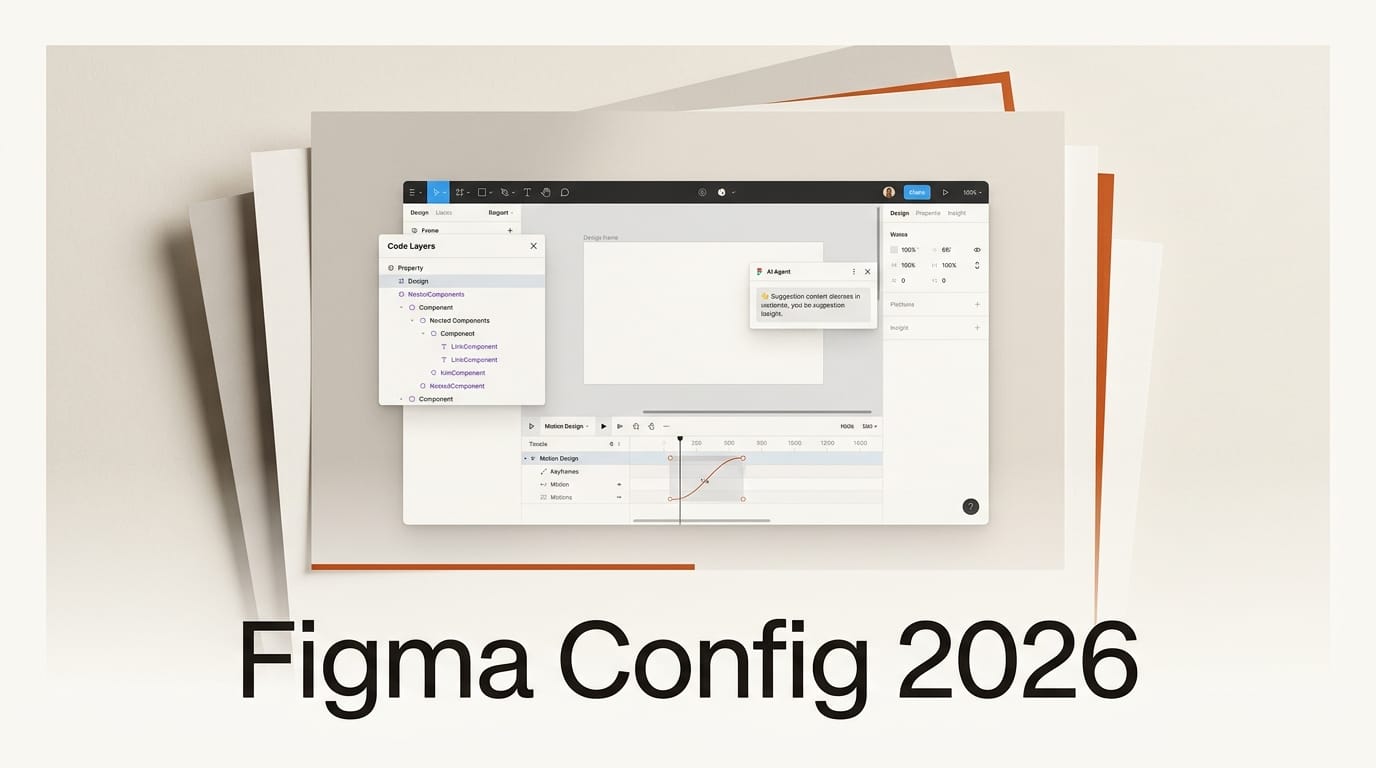
Figma Config 2026: code layers, motion, AI agent skills. Figma Config 2026 folds code layers, native animation via Figma Motion, and prompt-built AI agent skills directly into the design canvas. Figma used its Config 2026 conference on June 24 to fold three things designers used to leave the canvas for, writing code, building motion, and scripting AI agents, directly into the design file. The update turns Figma from a static design surface into a place where a prototype can run real code, animate natively, and call an AI agent you defined with a text prompt. What happened. At Config 2026, Figma announced code layers on the canvas, native animation through Figma Motion, and an expanded design agent that can run custom, prompt-built skills. TechCrunch reported the rollout the same morning, noting Figma now lets teams clone a repository and extract real flows from code into design layers. As CPO Yuhki Yamashita put it, "this is an environment where you don't really care about the quality of the code." Why it matters. For creators, the friction has always been the handoff: design in one tool, animate in another, hand code to engineers, repeat. Pulling code, motion, and agents onto a single canvas collapses that loop. You can prototype an interaction with real behavior, see a transition the way it will actually ship, and automate repetitive work without leaving the file. It...
Keep reading with a free account
The rest of this article, and every signal for Figma, is in your free account.