
UberIn development

Uber's robotaxi edge: human drivers
What happened

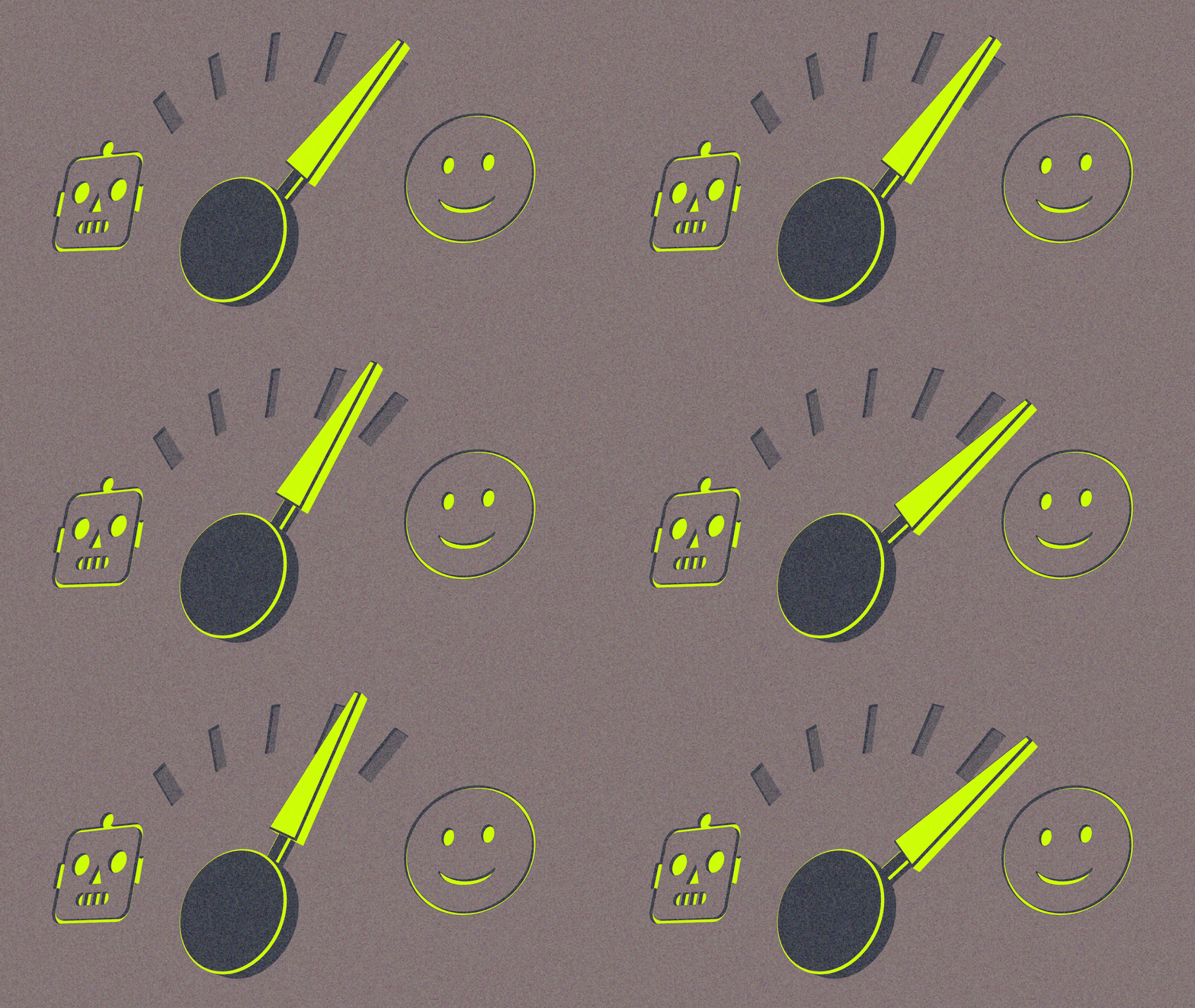
Uber is developing a hybrid ride-hailing network that combines autonomous vehicles with human drivers, believing this model will be more profitable than fleets composed entirely of robotaxis.

Source

axios.comSep 23, 2026By Joann Muller

Uber's robotaxi edge: human drivers

Article excerpt

Highlighted: the sentence this signal was extracted from

Uber is betting billions on a driverless future, but the secret to making the economics work could be - surprise! - its vast army of human drivers. Why it matters: Uber believes a hybrid network of robots and people can keep its expensive autonomous vehicles busier, and therefore more profitable, than fleets made up entirely of robotaxis. The big picture: Think of a high-tech robotaxi like an airplane: It costs money whether it's carrying passengers or sitting on the ground. The more trips each vehicle makes, the more revenue Uber and its robotaxi partners can squeeze from that expensive asset, offsetting the fixed costs of the technology, vehicle financing, insurance, depot space and other infrastructure. Between the lines: Ride-hailing is a supply-driven business, and robotaxis aren't a substitute for drivers, Uber says - they're an additional form of supply. With greater supply comes lower prices and shorter wait times, which means increased reliability. That stimulates more demand, and ultimately makes the ride-hailing pie bigger. That's Uber's theory. Robotaxi economics remain unproven, Uber's own president of autonomous mobility and delivery, Sarfraz Maredia, tells Axios. It's still early, and no company is making money yet operating them, nor is anyone yet operating them at massive scale. Whether AVs and all that's needed to support a fleet - including charging...

Keep reading with a free account

The rest of this article, and every signal for Uber, is in your free account.

Extracted by Autobound

From the Signal API record
Event
In development

What this signalsWork in development often leads to new buying for tools, data and services.

Product
hybrid robotaxi network

More in development signals at other companies

The full record

From the Signal API record

Topics and mentions

Product tags

  • online technology
  • general technology
  • future tech

Extraction

Confidence
90%
Detected
Sep 23, 2026
signal_type
news
signal_subtype
is_developing

Use this data

Get every in development signal for Uber and the companies you sell to, in the tools you already use.

  1. Ask Claude about it

    Connect Autobound to Claude, Claude Code or Cursor with MCP. Then ask: “What changed at Uber this week?”

  2. Send it to your own tools

    The Signal API returns in development signals for any list of companies as JSON, for your CRM, warehouse or app.

  3. Try it free

    Sign up and spend your free credits on the companies you sell to.

    Start Free1,000 free credits

The API returns more than this page shows

This page shows a preview. The full news record in the Signal API and MCP can also have these 8 fields. Some fields are empty for some signals.

Company

  • linkedin_urlValue in the API
  • industriesValue in the API
  • employee_count_lowValue in the API
  • employee_count_highValue in the API
  • revenueValue in the API
  • descriptionValue in the API

Signal

  • signal_nameValue in the API
  • associationValue in the API
Show the full JSONThe record on this page and the API request

GET /v1/signals/70cab96c-d7c9-5df6-108b-4a5f75f707e7 returns this record as JSON. POST /v1/companies/enrich returns every signal for uber.com.

{
  "signal_id": "70cab96c-d7c9-5df6-108b-4a5f75f707e7",
  "signal_type": "news",
  "signal_subtype": "is_developing",
  "detected_at": "2026-09-23T09:30:06+00:00",
  "company": {
    "name": "Uber",
    "domain": "uber.com"
  },
  "data": {
    "url": "https://www.axios.com/2026/09/23/uber-robotaxi-human-drivers",
    "title": "Uber's robotaxi edge: human drivers",
    "author": "Joann Muller",
    "excerpt": "Uber is betting billions on a driverless future, but the secret to making the economics work could be - surprise! - its vast army of human drivers. Why it matters: Uber believes a hybrid network of robots and people can keep its expensive autonomous vehicles busier, and therefore more profitable, than fleets made up entirely of robotaxis. The big picture: Think of a high-tech robotaxi like an airplane: It costs money whether it's carrying passengers or sitting on the ground. The more trips each vehicle makes, the more revenue Uber and its robotaxi partners can squeeze from that expensive asset, offsetting the fixed costs of the technology, vehicle financing, insurance, depot space and other infrastructure. Between the lines: Ride-hailing is a supply-driven business, and robotaxis aren't a substitute for drivers, Uber says - they're an additional form of supply. With greater supply comes lower prices and shorter wait times, which means increased reliability. That stimulates more demand, and ultimately makes the ride-hailing pie bigger. That's Uber's theory. Robotaxi economics remain unproven , Uber's own president of autonomous mobility and delivery, Sarfraz Maredia, tells Axios. It's still early, and no company is making money yet operating them, nor is anyone yet operating them at massive scale. Whether AVs and all that's needed to support a fleet - including charging...",
    "product": "hybrid robotaxi network",
    "summary": "Uber is developing a hybrid ride-hailing network that combines autonomous vehicles with human drivers, believing this model will be more profitable than fleets composed entirely of robotaxis.",
    "planning": true,
    "image_url": "https://images.axios.com/T-EPqtY4nZng1FgRxi0qDSY_0Q8=/0x0:1280x720/2026/09/22/1790105410849.gif",
    "confidence": 0.9,
    "product_data": {
      "name": "hybrid robotaxi network",
      "full_text": "a hybrid network of robots and people",
      "fuzzy_match": false
    },
    "product_tags": [
      "online_technology",
      "general_technology",
      "future_tech"
    ],
    "published_at": "2026-09-23T09:30:06Z",
    "article_sentence": "Uber believes a hybrid network of robots and people can keep its expensive autonomous vehicles busier, and therefore more profitable, than fleets made up entirely of robotaxis."
  }
}

Long text fields are shortened on this page.

Looking up one signal by its id is free. Enrich costs 2 credits per signal returned; a call with no results is free.